
01 · Inspect against a real checklist
Work the asset item by item. Each item gets an actual result, not a memory.

INSPECTION RECORDS, VERIFIED
InspectWarden is inspection, deficiency, and service software for fire-protection and life-safety contractors. Your techs already find the problems. This makes sure every one of them leaves the building written down, documented with photos, and in front of the customer.
Built around
The building and its assets
Recorded in the field
Results, findings, photos
Ready for the handoff
A clear inspection report
The finding is the sale. Most of them never make it off the truck.
A tech walks a building and sees the real work: the extinguisher that needs a recharge, the unit that's past its 6-year, the one bracket nobody's fixed in two years. He writes it on a tag, or he remembers it, or he tells someone at the shop.
Then the day ends. The route rolls on. The finding is gone.
Nobody quoted it. Nobody scheduled it. Next year a tech walks the same building and finds the same thing.
The pattern is familiar: the inspection gets billed, and the repair work — the part with the margin in it — quietly evaporates between the field and the office.
Working now
Work the asset item by item. Each item gets an actual result, not a memory.
Severity, notes, and photos, attached to the specific asset and location. It stays open until someone closes it.
The inspection seals with the inspector, the date, the results, and the next due date. It doesn't drift afterward.
A PDF with the site, the assets, the checklist results, the deficiencies, the inspector, and what's due next. Give it to the customer or keep it for the file.
One dashboard: what's open, what's coming due, and searchable history for every building you service.
See it work
A narrated walkthrough of the real application: the day’s queue, tagged assets, guided pass/fail checklists, a deficiency logged with a photo on site, and the report in the building owner’s inbox before you leave the lot.
Sample data. Dramatized for demonstration purposes only.
Inside the app
Not mockups. These are screens from a live account.
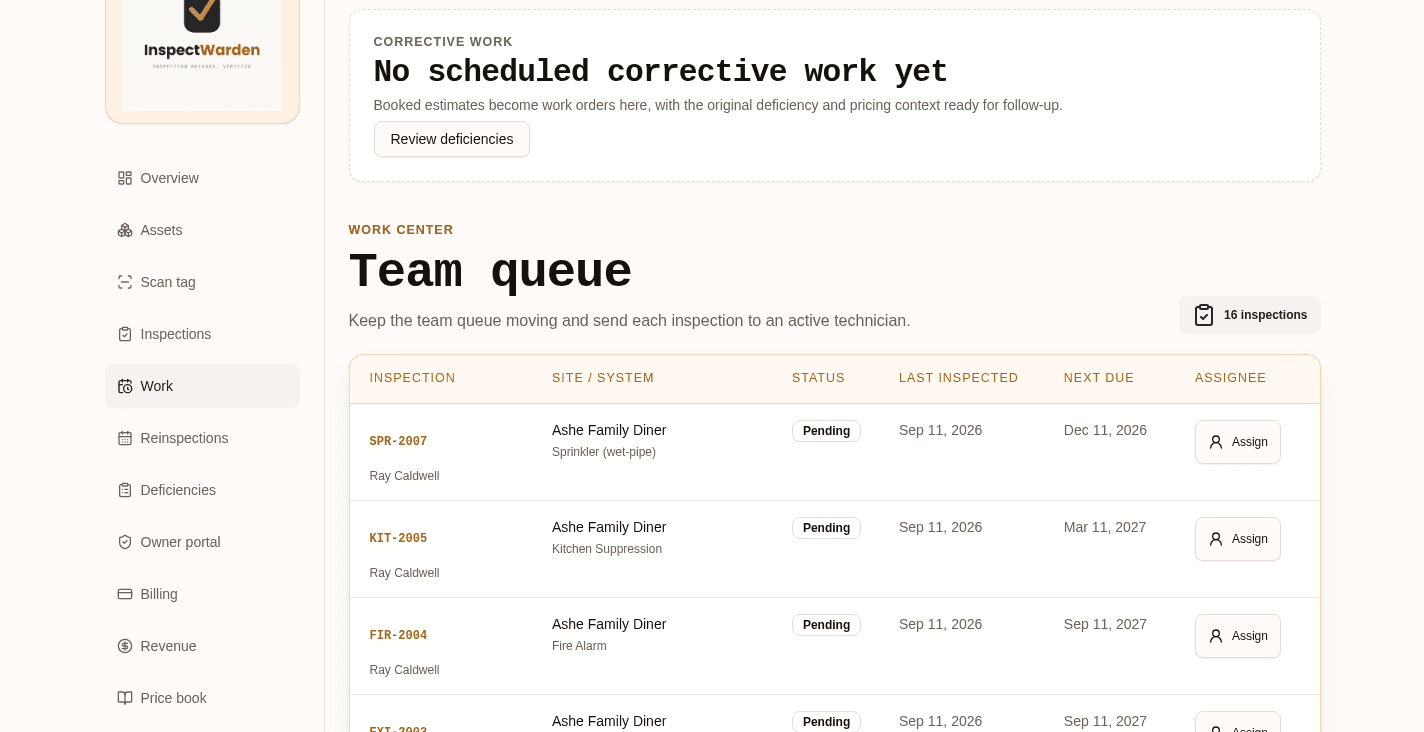
Team queue
Every inspection on the board with its site, system type, last inspected date, next due date, and the tech it belongs to.
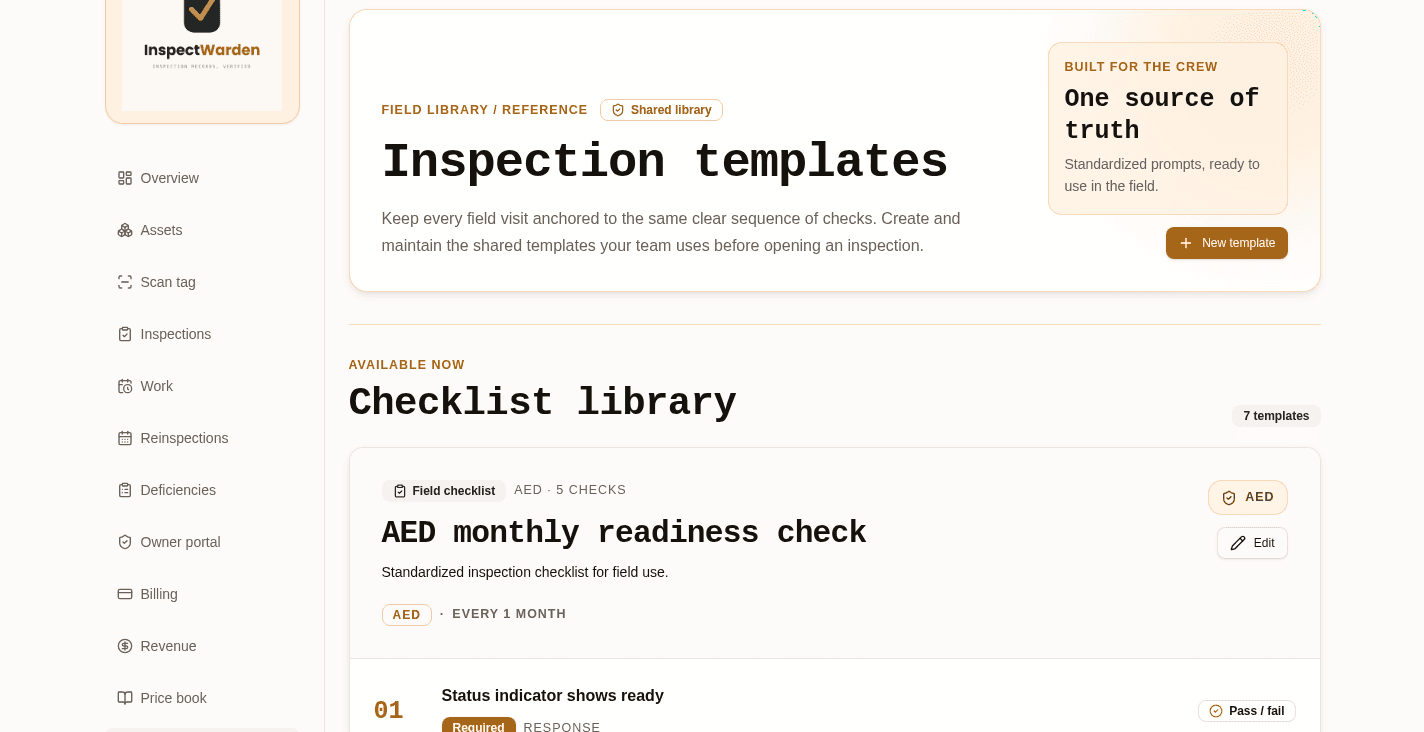
Checklist library
One shared set of checklists so two techs inspecting the same system record the same things, in the same order.
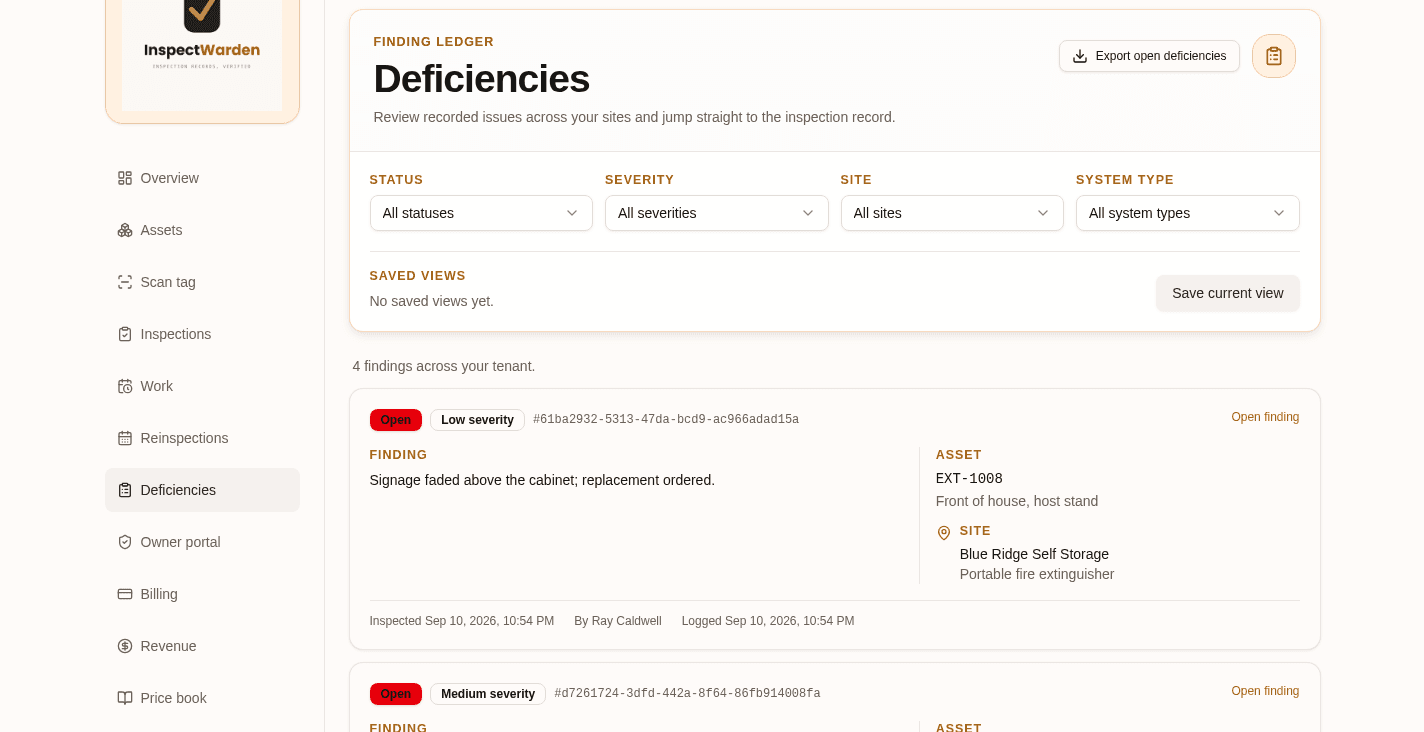
Deficiency ledger
Findings stay open until somebody closes them — filtered by status, severity, site, or system type.
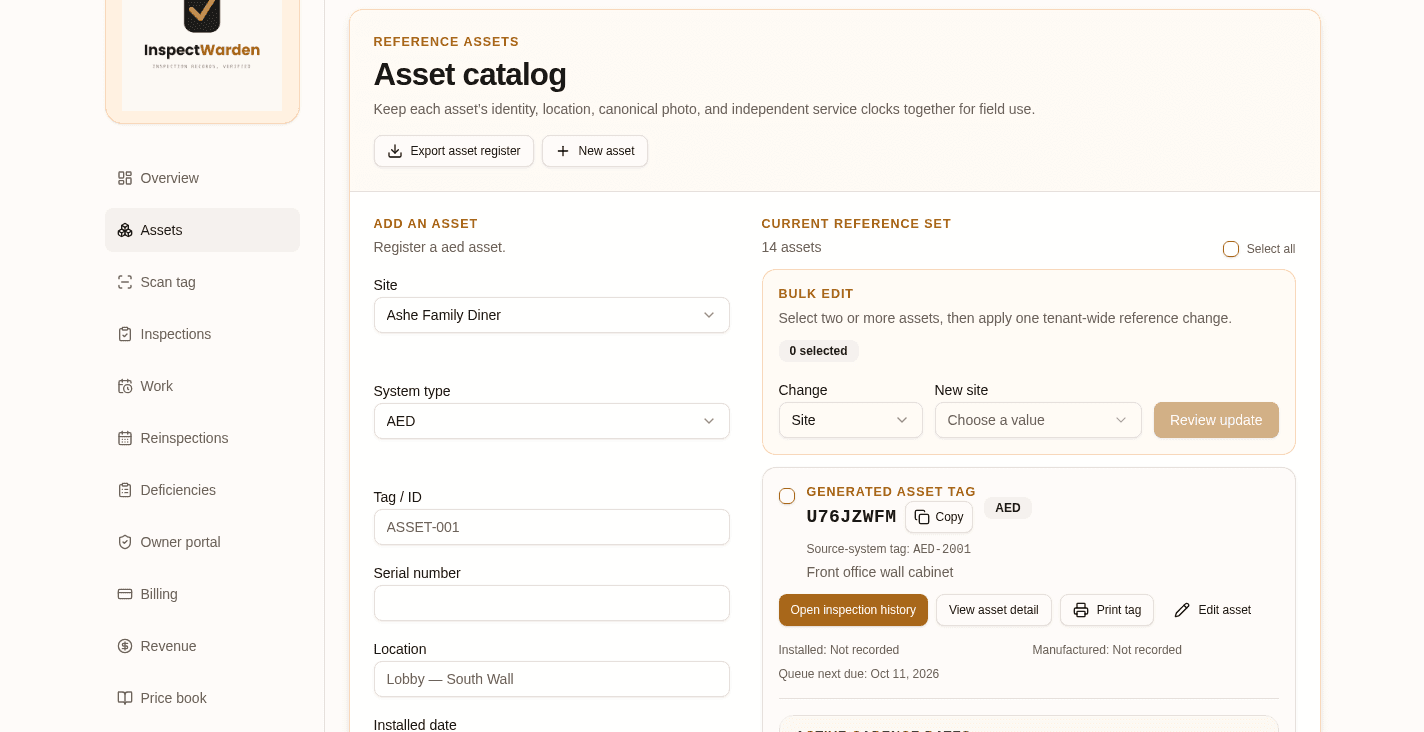
Asset catalog
Each device carries its own tag, location, photo, and service clock, so history follows the asset instead of the paperwork.
The point
This is why the deficiency record is the center of the product instead of a footnote on a tag. Once a finding exists as a real record — with a photo, a severity, and an asset attached — it stops being one tech's memory and becomes something your office can act on, quote, schedule, and bill.
That's the same reason it's built around the building rather than around one type of equipment. An average commercial property — office, warehouse, restaurant, retail — has several life-safety systems on a routine inspection cycle. Today InspectWarden handles portable fire extinguishers. The data model underneath was built to carry the rest of the route, and that work is underway.
Who it's for
Two trucks or twelve. Owners who still work in the field. Shops where the person reading the report is the same person who's going to do the repair.
If your inspection process currently lives on carbon paper, a clipboard, or a spreadsheet somebody rebuilt at 6 p.m., this is aimed at you.
Straight answers
Fire extinguishers are the equipment type with a complete workflow today. Alarms, sprinklers, kitchen suppression, and emergency lighting are in the data model, not yet in the field workflow. There's no customer-facing portal.
Requirements for inspection, testing, and recordkeeping vary by jurisdiction and by your authority having jurisdiction. InspectWarden helps you document work carefully and consistently. It does not determine or guarantee compliance, and it isn't a substitute for the codes and requirements that apply to your customers' properties.
Once for the visit. Again for the work it found.